
5, Mastering Action Cameras Shooting Tips for Beginners & Hobby
- bergsi20031989
- Feb 22, 2024
- 9 min read
Updated: Mar 9, 2024
"Action Camera" Master the Essentials - Step by Step Guide
Mastering Your Action Camera,Tips and techniques for beginners and to improve their shooting skills and ensure safe operation.
Mastering Action Cameras Shooting Tips for Beginners & Hobby
This blog post is all about tips and tricks to elevate your skills in capturing breathtaking and unique moments through the lenses of your eyes and your pocket camera.
We will enlighten you with several tricks ranging from beginner to more advanced levels. At the end, we will share some amazing resources to further enhance your skills.
Enjoy reading and gain insights for your personal mastery.



Don't miss out on the latest trends in tech gear, from cutting-edge drones to the best in outdoor equipment and sustainable fashion.
Our newsletter is your gateway to discovering different cool brands, gaining valuable insights, and getting your hands on exciting gear that stands out from the crowd. Whether you're a tech enthusiast, an outdoor adventurer, or a passionist about ethical fashion, we've got something for everyone. We love to discover useful, special and suistainable goods that are bringing value into the life of others. Sign up now to stay informed and inspired by the innovations shaping our world.
First and foremost we will use an easy approach with our language and try to keep it as essential yet detailed to provide you with the best possible effect to catch the information provided.
"Yet, the colorful and brilliant magic lies beyond these words. The images and visuals captured through the lens of your unique worldview are breathtaking and exciting in photography."
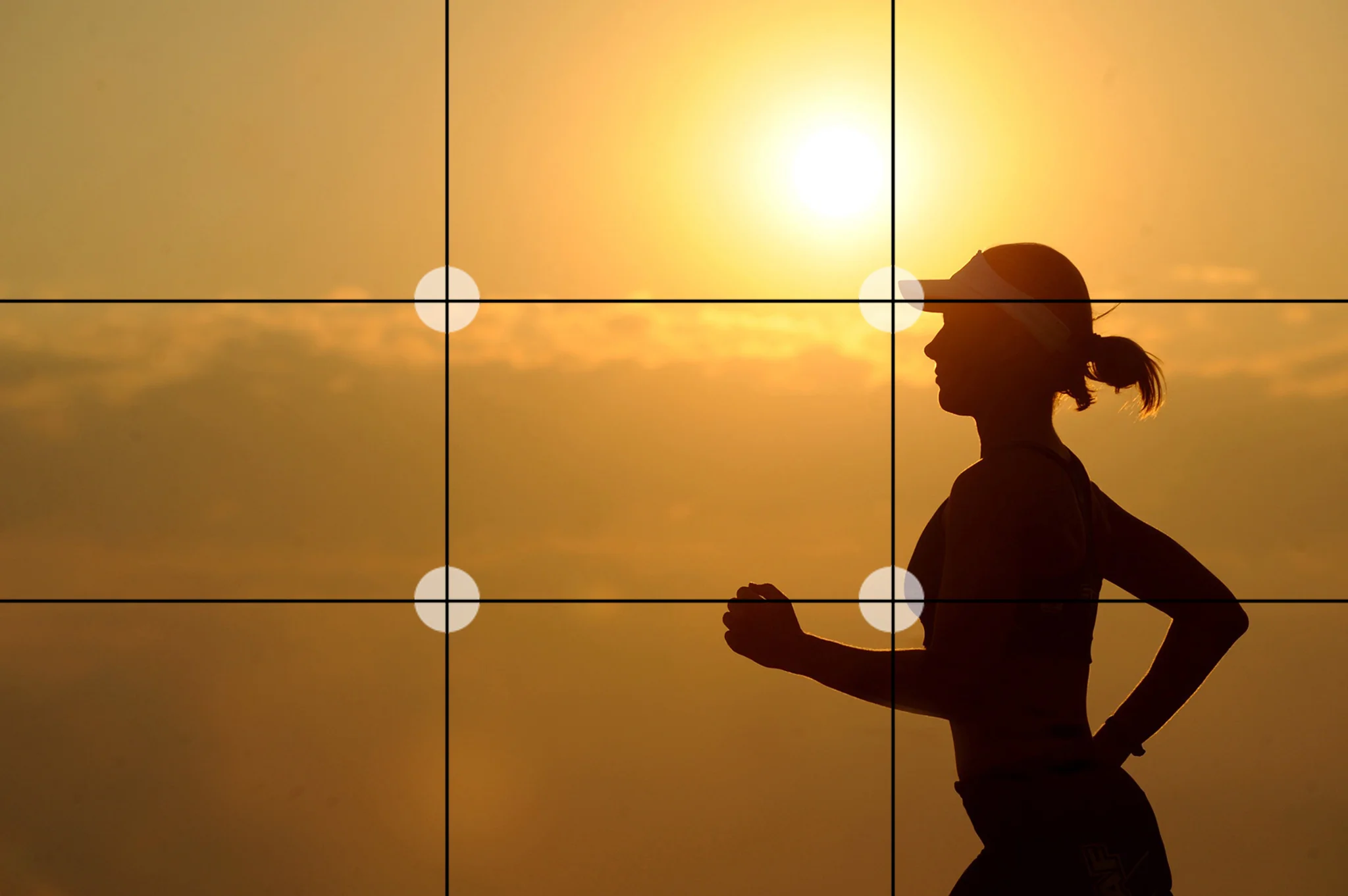
Rule of Thirds: Creating Balanced Compositions (Skill Level: 1 - Beginner)
Understanding the Grid Most action cameras feature a grid that divides the screen into nine segments. Position key elements along these lines or intersections for dynamic composition.
Expert Tip Activate the grid feature on your camera to make composing shots with the rule of thirds intuitive and straightforward, especially useful in fast-paced action scenarios.
Dynamic Positioning: Place subjects off-center to enhance visual interest, particularly effective in action videography where movement is a key element.
Expert Tip Practice with static subjects to get a feel for off-center composition before applying it to moving subjects for more dynamic results.
Balancing the Scene: Use the rule of thirds to balance your main subject with another element, adding depth and interest.
Expert Tip Try to find a balance between the subject and background elements to prevent the scene from feeling cluttered or unbalanced.
Leading Lines: Guiding the Viewer’s Eye (Skill Level: 2 - Intermediate)
Natural Guides: Utilize lines within your environment to direct the viewer's attention towards the main subject or through the scene.
Expert Tip Leading lines are not just straight; look for curved or zigzag patterns that add a unique perspective to your footage.
Depth and Perspective: Leading lines add depth, making footage more immersive and guiding viewers on a visual journey.
Expert Tip Experiment with different angles to see how leading lines change the scene's depth and feel.
Directional Movement: Enhance the sense of speed and direction in action scenes with leading lines, amplifying the excitement.
Expert Tip Use leading lines to direct the viewer’s eye towards the action or to follow the movement, enhancing the narrative flow of your footage.
Framing Your Shots: Adding Depth and Focus (Skill Level: 3 - Advanced)
Natural Frames: Frame your subject with elements like trees or archways to focus attention and add depth.
Expert Tip Look for framing opportunities that naturally occur in your environment, and position yourself or your subject accordingly.
Layering: Create a visually rich story by incorporating various layers into your composition, such as foreground, subject, and background.
Expert Tip Use a wide aperture to create depth of field, blurring the foreground or background to emphasize the subject layer.
Isolation: Isolate your subject from busy backgrounds, crucial in action scenes to maintain focus on the main action.
Expert Tip Adjust your position or use a longer focal length to simplify the background, ensuring your subject stands out.
Utilizing Foreground Elements: Enhancing Depth (Skill Level: 4 - Expert)
Immediate Interest: Introduce foreground elements to create a sense of place and draw viewers into the scene.
Expert Tip Foreground elements should complement, not compete with, your main subject. Choose elements that add to the story or atmosphere.
Scale and Reference: Foreground elements can offer a sense of scale, helping viewers understand the size and distance of subjects.
Expert Tip Use people, objects, or natural features as a scale reference to give viewers a clearer sense of the scene’s proportions.
Depth Illusion: Including foreground elements, especially with a wide-angle lens, can exaggerate depth, making the scene more dynamic.
Expert Tip Experiment with different distances between the camera and the foreground element to enhance the depth illusion in your action footage.
Mastering the art of composition in action videography is about perseverance, exploration, learning, and continually creating more footage. With practice, you will improve your skills.

Creative Shooting Techniques for Action Videography
Elevate your action camera footage from simple clips to captivating narratives with these expert tips on creative shooting techniques, ranked from beginner to advanced skill levels.
1. Dynamic Storytelling Through Planned Shots (Skill Level 1 - Beginner)
Narrative Structure: Focus on building a narrative by planning your shots to include an introduction, climax, and resolution.
Expert Tip Start with a simple storyboard or shot list to organize your ideas and ensure you capture all the essential moments. This basic planning is crucial and accessible for beginners.
2. Experimenting with Angles and Perspectives (Skill Level 2 - Intermediate)
Personal Viewpoint: Utilize a chest mount for a first-person perspective.
Expert Tip Switch between the chest mount and other perspectives to keep your footage engaging. This requires a bit more thought and effort in planning and execution.
Aerial Shots: Employ a drone to capture stunning aerial views.
Expert Tip Drone shots should be used judiciously to maintain their impact. Operating a drone and integrating its footage into your story adds complexity and requires intermediate skills.
Unique Angles: Explore unconventional angles for added variety.
Expert Tip Getting creative with camera placements can yield surprising results but often requires inventive thinking and a willingness to experiment beyond basic shots.
3. Enhancing Footage Slow Motion (Skill Level 3 - Intermediate to Advanced)
Slow Motion: Use slow motion to emphasize key moments.
Expert Tip Slow motion is best used sparingly for moments that benefit from detailed, drawn-out visuals. Understanding when and how to apply slow motion effectively requires a good grasp of pacing and narrative emphasis.
4. Incorporating Time-Lapse (Skill Level 4 - Advanced)
Time-Lapse: Show transitions or movement within the scene using time-lapse.
Expert Tip Use a stationary subject as an anchor point for your time-lapse to contrast with the sped-up movement. Crafting a compelling time-lapse involves advanced planning, patience, and a solid understanding of the technical settings on your camera.
5. Combine Diff. Techniques Dynamic Storytelling (Skill Level 5 - Expert)
Integrating Various Techniques: Combine planned narrative structure, diverse angles, slow motion, and time-lapse for rich, dynamic storytelling.
Expert Tip Mastering the art of action videography involves not just knowing each technique but understanding how to blend them seamlessly into a coherent and engaging story
Integrating these compositional techniques into your action videography, you can elevate your footage from simple recordings to visually compelling stories. Each technique requires practice and experimentation, so start with the basics. Repetition is key for Mastery.

Capturing High-Quality Audio in Action Videography
High-quality audio is pivotal in transforming good footage into an immersive storytelling experience. Here’s how to ensure your action videos are heard just as well as they are seen
Investing in External Microphones (Skill Level 2 - Intermediate)
Clarity in All Conditions: External microphones significantly improve audio quality, crucial in environments where built-in mics underperform.
Expert Tip Research and invest in a microphone that suits your specific filming conditions, whether it’s for underwater adventures or high-altitude escapades.
Wind Conditions: In windy scenarios, built-in microphones often capture more noise than desired audio. External mics with wind protection can mitigate this issue.
Expert Tip Always test your external microphone in various conditions to find the optimal settings and placements for wind noise reduction.
Reducing Wind Noise (Skill Level 3 - Advanced)
Windshields and Settings: Utilizing windshields and adjusting audio settings in-camera can prevent wind noise from overpowering your footage.
Expert Tip Combine physical wind protection with low-cut filters available in most action cameras to doubly ensure clarity in your audio capture.
Post-Production Adjustments: Software solutions can also reduce or eliminate wind noise during the editing process.
Expert Tip Familiarize yourself with audio editing tools that offer noise reduction features. Sometimes, a slight adjustment can make a significant difference in audio quality.
Syncing External Audio (Skill Level 4 - Expert)
Enhanced Sound Quality: Recording audio separately and syncing it in post-production can elevate the professional feel of your videos.
Expert Tip Use a clapperboard or a simple clap at the beginning of your recording to make syncing audio in post-production easier.
Editing Software: Modern editing software provides robust tools for aligning external audio with your footage, ensuring seamless integration.
Expert Tip Invest time in learning the audio syncing features of your editing software. Many programs offer automatic syncing based on waveform analysis, simplifying the process.
Navigating Challenging Shooting Environments in Action Videography
Capturing action-packed adventures often means filming in challenging environments. Whether you're diving underwater, racing through high-motion scenes, or shooting in the dim light of dawn or dusk, these tips will help you navigate these situations and capture stunning footage.
Underwater Videography (Skill Level 3 - Advanced)
Clarity Underwater: Use a waterproof housing to protect your camera and ensure clear shots. Select a housing with a flat glass lens for sharper images.
Expert Tip Apply anti-fog inserts inside your camera housing to prevent condensation from blurring your underwater footage.
Color Correction: Water absorbs colors like red and orange, leaving your footage with a blue or green tint. Use red or magenta filters to bring back the natural hues of the underwater world.
Expert Tip Adjust white balance settings if your action camera allows, or correct colors in post-production for vibrant underwater scenes.
High-Motion Environments (Skill Level 2 - Intermediate)
Stability is Key: Utilize gimbals or built-in stabilization features to keep your footage smooth amidst the action.
Expert Tip Practice moving smoothly with your camera, even with stabilization tech. Your physical technique is just as important as your equipment.
Focus on the Action: In fast-paced environments, set your camera to a higher shutter speed to reduce motion blur and keep subjects in sharp focus.
Expert Tip Anticipate the action and position yourself accordingly, ensuring you capture the most dynamic moments without losing focus.
Low-Light Conditions (Skill Level: 4 - Expert)
Adjusting Settings: Increase ISO settings judiciously to brighten your footage without introducing too much noise. Open up your aperture to let in more light, if possible.
Expert Tip Test different ISO levels to find the perfect balance between brightness and noise for your specific camera model.
Lighting Accessories: Consider using external lights designed for action cameras to illuminate your scene without being intrusive.
Expert Tip Position your lights strategically to avoid harsh shadows or overexposure, creating a natural-looking light setup that enhances your shots.

Recommended Courses to Train Your Skills
To further hone your action videography and editing skills, consider enrolling in online courses. Here are a few recommendations
Comprehensive Learning Platforms like Udemy, Skillshare, and Masterclass offer courses that cover a wide range of topics, from basic photography courses operation to individual courses dedicated towards action cameras.
Skill Enhancement: Engaging with these courses can significantly improve your technical skills, making you a more confident and competent in your shootings.
Accessible Learning: With courses available online, you can learn at your own pace and schedule, making it easier to fit into your lifestyle.
Free sources like YouTube might elevate your skills.
If you're interested and passionate about the world of photography and videography, consider participating in courses, watching videos, and engaging with like-minded communities. This will boost your confidence and abilities, allowing you to grow steadily.
Don't miss out on the latest trends in tech gear, from cutting-edge drones & action cameras to the best in outdoor equipment and sustainable fashion.
Our newsletter is your gateway to discovering different cool brands, gaining valuable insights, and getting your hands on exciting gear that stands out from the crowd. Whether you're a tech enthusiast, an outdoor adventurer, or a passionist about ethical fashion, we've got something for everyone. We love to discover useful, special and suistainable goods that are bringing value into the life of others. Sign up now to stay informed and inspired by the innovations shaping our world.
Are you passionate about or interested in cameras or drones? Check out our Basic Beginner's Guide. We will equip you with the essential knowledge needed to find your perfect choice.
Explore Our Camera Basics Guide Don't miss our detailed blog post series on camera basics. Designed for everyone at every level, this step-by-step guide is your roadmap to safe and relaxed flying.
Explore Our Drone Basics Guide Don't miss our detailed blog post series on drone basics. Designed for pilots at every level, this step-by-step guide is your roadmap to safe and proficient flying.
Explore Our Suistainable Fashion Guide Don't miss our detailed blog post series on sustainability in fashion and their leading brands. Designed for everyone who loves cool & innovative fashion plus is looking for that little extra to support, this step-by-step guide is your roadmap to new different and exciting clothes.
Commonly Asked FAQ's in Action Photo & Videography
How can I improve my video composition in action shots? Improving video composition involves understanding and applying basic principles like the Rule of Thirds, utilizing leading lines, and experimenting with different perspectives. Practicing these techniques will enhance the visual appeal of your action shots.
What are some effective ways to reduce wind noise in action videography? To reduce wind noise, consider using external microphones with windshields or deadcats, adjusting your camera's audio settings, and applying noise reduction filters during post-production.
Can you recommend any editing software for beginners to edit action footage? Beginners can start with Adobe Premiere Rush or iMovie, as both offer intuitive editing interfaces, basic color correction tools, and a selection of transitions and effects suitable for action footage editing.
Where can I find online courses to enhance my action videography skills? Online platforms like Udemy, Skillshare, and Coursera offer a variety of courses ranging from basic action camera operation to advanced videography techniques and video editing, tailored to different skill levels in action videography.
What accessories are essential for capturing high-quality action footage? Essential accessories for enhancing action footage include stabilizing gimbals, external microphones for better audio quality, waterproof housings for underwater shots, and varied mounts (such as helmet or chest mounts) to achieve different shooting perspectives.


Comments