
3""DroneTypes Explained, A Guide to Choosing the Right Drone for Your Needs"
- bergsi20031989
- Feb 17, 2024
- 12 min read
Updated: Mar 10, 2024
"Drones" Master the Essentials - Step by Step Guide
Choosing the Right Drone Learn how to select the perfect drone based on your specific needs, budget, and skill level.
"DroneTypes Explained, A Guide to Choosing the Right Drone for Your Needs"
With over 1 million drones registered in the United States and a global market poised to exceed $43 billion by 2024
Welcome to our comprehensive drone series.
This collection of blog posts is your Guide to understanding the diverse world of drones.
In this blog, we're diving into the different types of drones that are good to know.
Our focus is on presenting a clear overview of the drone landscape, highlighting individual drone types
For those craving more detailed insights—features, pros, and cons—our next post,

Don't miss out on the latest trends in tech gear, from cutting-edge drones to the best in outdoor equipment and sustainable fashion.
Our newsletter is your gateway to discovering different cool brands, gaining valuable insights, and getting your hands on exciting gear that stands out from the crowd. Whether you're a tech enthusiast, an outdoor adventurer, or a passionist about ethical fashion, we've got something for everyone. We love to discover useful, special and suistainable goods that are bringing value into the life of others. Sign up now to stay informed and inspired by the innovations shaping our world.
First and foremost we will use an easy approach with our language and try to keep it as essential yet detailed to provide you with the best possible effect to catch the information provided.
"Yet, the colorful and brilliant magic lies beyond these words. The images and visuals captured through the lens of your unique worldview are breathtaking and exciting in drone videogreaphy and photography."
What to Expect
Deep Dives into Drone Types: From the palm-sized Nano Drones to the high-flying Professional Drones, we explore the spectrum of UAVs available today.
User-Friendly Insights: Learn which drones are best for beginners and which ones cater to the needs of professionals and hobbyists.
Applications and Advancements: Discover how drones are revolutionizing fields such as cinematography, agriculture, and even racing.
Join us as we offering key insights and practical advice to elevate your understanding and appreciation of drones.
Dive into the fascinating world of drones with us, and unlock the secrets of these incredible machines that have captured the imagination of millions worldwide.
To sort the drone types by user-friendliness, starting with the most user-friendly, we consider factors like ease of use, accessibility for beginners, safety features, and the learning curve required for effective operation
Nano Drones: Their small size, affordability, and simple controls make them the most user-friendly, especially for beginners and educational purposes.
Consumer Drones: Designed for the general public, these drones often come with user-friendly features like automated flight modes, GPS stabilization, and intuitive piloting controls.
Racing Drones: While requiring more skill to operate due to their speed and agility, racing drones are embraced by enthusiasts willing to learn, supported by a vibrant community.
Multirotor Drones: Generally user-friendly with various models designed for both beginners and professionals, but their range of capabilities can introduce a steeper learning curve for advanced features.
Fixed-Wing Hybrid VTOL: Their combination of fixed-wing and VTOL capabilities offers versatility, but the complexity of operation and cost may not be as accessible to casual or beginner users.
Single-Rotor Helicopters: The complexity of their flight dynamics and controls places them further down the list, requiring more skill and understanding of helicopter piloting principles.
Professional Drones: Equipped with advanced features and capabilities for specific commercial and industrial applications, these drones demand a higher level of expertise and are less focused on user-friendliness for casual users.

Nano Drones
also known as micro drones, are the smallest category of unmanned aerial vehicles (UAVs), typically weighing less than 100 grams. Despite their diminutive size, these drones are gaining popularity for a variety of recreational, educational, and specialized tasks. Their compactness and agility open up a range of possibilities not feasible with larger UAVs.
Key Features of Nano Drones
Compact Size: The defining characteristic of nano drones is their small size, making them easy to maneuver in tight spaces and less obtrusive in public or sensitive areas.
Ease of Use: Many nano drones are designed with beginners in mind, featuring simplified controls and stability features that make them easy to fly right out of the box.
Portability: Their tiny size makes them highly portable, allowing users to carry them in pockets or small bags, ready to fly at a moment’s notice.
Safety: Due to their lightweight design and small propellers, nano drones pose less risk of injury or damage to property, making them suitable for indoor use and around children.
Advantages
Affordability: Nano drones are generally more affordable than their larger counterparts, making them accessible entry points for individuals interested in drone technology.
Educational Tool: They serve as excellent educational tools, introducing users to the basics of drone piloting, aerodynamics, and robotics in a safe and fun way.
Recreational Fun: Despite their small size, many nano drones are equipped with features like flip capabilities, obstacle avoidance, and even simple cameras, offering plenty of entertainment value.
Research and Development: In scientific and military research, nano drones are used to study swarm behavior, surveillance techniques, and innovative applications in confined or hard-to-reach spaces.
Applications
Hobby Flying and Learning: Nano drones are popular among hobbyists and beginners looking to practice flying skills or enjoy drone technology without a significant investment.
Educational Purposes: Schools and educational programs use nano drones to teach principles of science, technology, engineering, and mathematics (STEM).
Surveillance and Security: In specialized applications, their small size allows them to discreetly gather video or photographic data in sensitive or confined areas.
Innovative Research: Scientists and engineers explore the use of nano drones for advanced applications, including environmental monitoring, disaster response, and exploring hazardous environments where larger drones cannot operate.
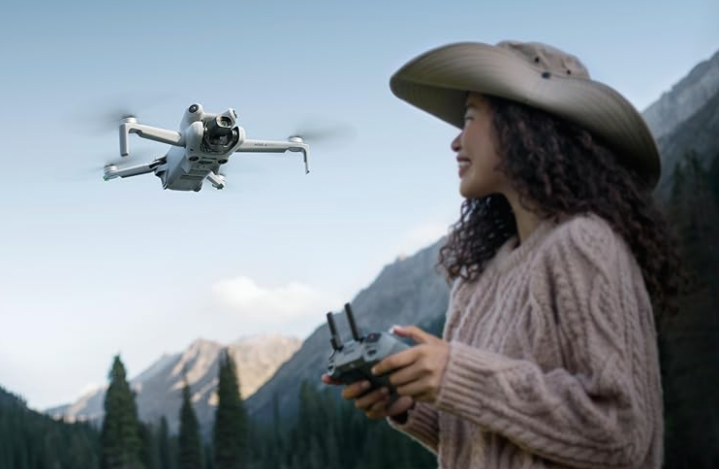
Consumer Drones
also known as recreational drones, are designed for the general public, catering to hobbyists, photographers,These drones blend advanced technology with user-friendly features, making aerial photography, videography, and recreational flying accessible to a wide audience
Key Features of Consumer Drones
Ease of Use: Consumer drones often come with features like automatic takeoff and landing, GPS navigation, and pre-programmed flight paths, making them accessible to beginners.
Integrated Cameras: Most consumer drones are equipped with high-quality cameras and stabilization technologies like gimbals, enabling users to capture stunning aerial photos and videos.
Safety Features: Built-in safety features, such as obstacle detection, return-to-home (RTH) functions, and geo-fencing, help prevent accidents and ensure a safe flying experience.
Compact and Portable: Many models are designed to be portable, with foldable arms or bodies that make them easy to transport, appealing to travelers and outdoor enthusiasts.
Connectivity and Apps: Connectivity options, such as Wi-Fi and Bluetooth, allow drones to be controlled via smartphones or tablets using dedicated apps, offering live video streaming and easy sharing of media.
Advantages
Accessibility: Consumer drones are designed to be accessible to a wide range of users, from beginners to experienced pilots, with minimal learning curve.
Versatility: They can be used for a variety of purposes, including capturing family events, exploring nature from a new perspective, and creating content for social media or professional projects.
Community and Support: A large community of drone enthusiasts and a wide array of online resources, tutorials, and accessories are available, enhancing the user experience.
Applications
Aerial Photography and Videography: The primary use of consumer drones, enabling amateurs and professionals alike to capture stunning footage for personal, commercial, or artistic projects.
Recreational Flying: Many users enjoy flying drones as a hobby, appreciating the thrill of piloting and the opportunity to explore the skies.
Travel and Adventure: Drones add an exciting dimension to travel and outdoor activities, allowing adventurers to document their journeys from breathtaking vantage points.
Real Estate and Small Business Marketing: Affordable consumer drones are increasingly used for creating promotional content, offering unique perspectives on properties and products.

Racing Drones,
designed for speed and agility, are a distinct category within the broader drone ecosystem, catering to enthusiasts and competitors in drone racing. These UAVs (Unmanned Aerial Vehicles) are optimized for high-speed flight through obstacle courses, often in a first-person view (FPV) racing format.
Key Features of Racing Drones
High-Speed and Agility: Racing drones are built for speed, capable of reaching high velocities quickly. Their agility allows pilots to navigate through complex courses with precision.
FPV Capability: Pilots fly these drones using FPV systems, which involve wearing goggles that provide a live video feed from a camera mounted on the drone, creating an immersive flying experience.
Customization and Build-Your-Own Kits: Many racing drones are sold as kits or are fully customizable, allowing enthusiasts to build and modify their drones for optimal performance and speed.
Lightweight and Aerodynamic Design: These drones are designed to be lightweight and aerodynamic to maximize speed and maneuverability.
Advantages
Competitive Sport: Drone racing has emerged as a competitive sport with leagues and competitions worldwide, offering a unique blend of technology, skill, and speed.
Skill Development: Flying a racing drone develops piloting skills, including reflexes, spatial awareness, and control precision, under challenging conditions.
Community and Social Interaction: The racing drone community is vibrant and welcoming, offering opportunities for social interaction, sharing tips, and competing in races.
Applications
Drone Racing Competitions: The primary application of racing drones is in the sport of drone racing, where pilots navigate obstacle courses at high speeds in competitions.
Recreational Flying: Beyond formal racing, these drones are also used for recreational flying among enthusiasts who enjoy the thrill of high-speed flight and FPV piloting.
Pilot Training: Racing drones can serve as an excellent training tool for pilots to hone their flying skills, given the demands of precise control and quick reactions.

Multirotor Drones
are a type of unmanned aerial vehicle (UAV) characterized by their multiple rotors, typically two or more, which provide lift and propulsion. The most common configurations include quadcopters (four rotors), hexacopters (six rotors), and octocopters (eight rotors).
Key Features of Multirotor Drones
Stability and Maneuverability: The multiple rotors provide greater control over movement and stability in the air, making them ideal for aerial photography, videography, and precise positioning tasks.
Vertical Takeoff and Landing (VTOL): Multirotor drones can hover, take off, and land vertically, which makes them suitable for operations in varied and challenging environments.
Configurability: They can be equipped with a wide range of equipment, including cameras, sensors, and cargo carriers, making them versatile tools for different applications.
Advantages
Ease of Use: Multirotor drones are generally easier to pilot compared to fixed-wing drones, making them accessible to hobbyists and professionals alike.
Precision: The ability to hover and perform intricate maneuvers allows for precise operations, such as close-up inspections and detailed aerial photography.
Flexibility: Their ability to carry different payloads and perform in various conditions makes them suitable for a wide range of applications, from recreational to commercial and industrial uses.
Applications
Aerial Photography and Videography: Widely used by hobbyists and professionals in filmmaking, real estate, and tourism for capturing high-quality aerial shots.
Inspection and Monitoring: Used in agriculture, infrastructure inspection, and environmental monitoring to access hard-to-reach areas and gather detailed data.
Search and Rescue: Their maneuverability and ability to carry cameras and sensors make them valuable tools in search and rescue operations, helping to locate individuals in difficult terrains.
Surveillance and Security: Employed by law enforcement and security firms for crowd monitoring, border surveillance, and property security.
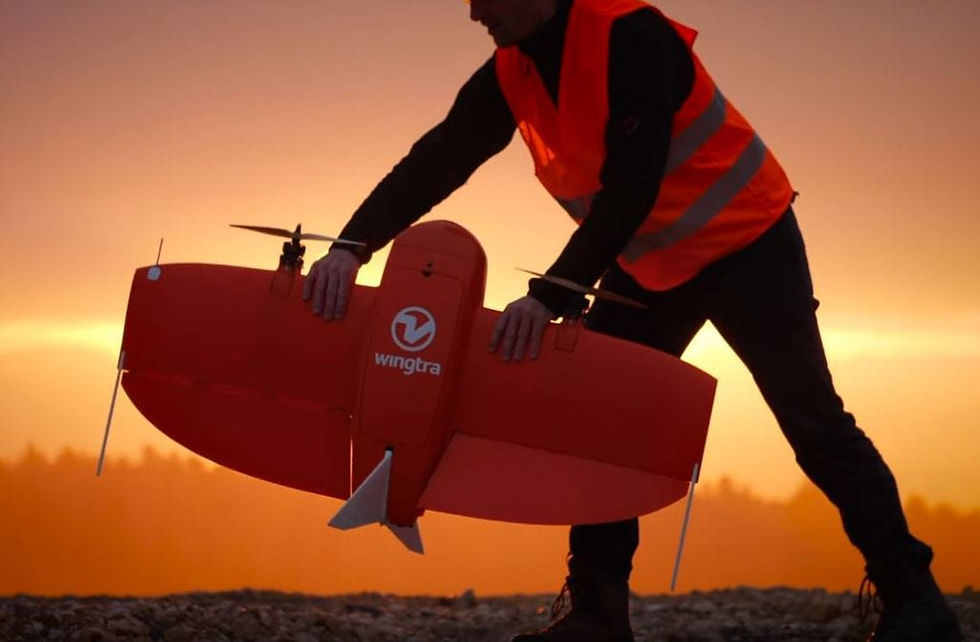
Fixed-wing hybrid VTOL (Vertical Take-Off and Landing)
combine the design elements and functionalities of both fixed-wing aircraft and rotor-based systems, offering a unique set of capabilities.
Key Features of Fixed-Wing Hybrid VTOL Drones
Hybrid Design: These drones take off and land vertically like a helicopter but transition to fixed-wing flight for cruising. This design allows them to benefit from the efficiency of fixed-wing flight while maintaining the VTOL capabilities of multirotor drones.
Efficiency in Flight: Once in the air and transitioned to fixed-wing mode, these drones are more energy-efficient and can cover longer distances at higher speeds than purely rotor-based systems.
Complex Flight Control Systems: Incorporating mechanisms for both vertical and horizontal flight, these drones are equipped with advanced flight control systems to manage the transition phases smoothly.
Advantages
Versatility: Hybrid VTOL drones can operate in varied environments, requiring no runway for takeoff or landing, which makes them suitable for missions in remote or rugged terrains.
Extended Range and Endurance: The fixed-wing aspect provides greater range and flight time compared to traditional multirotor drones, making them ideal for extensive surveying and monitoring tasks.
Carrying Capacity: While not as capable as single-rotor helicopters in terms of payload, these drones strike a balance between payload capacity and flight efficiency.
Applications
Precision Agriculture: Used for crop monitoring, mapping, and spraying, where their ability to cover large areas efficiently is a significant advantage.
Environmental Monitoring and Conservation: Ideal for long-duration missions over vast areas, such as wildlife tracking, forest management, and coastal surveillance.
Search and Rescue Operations: Their extended range and endurance make them suitable for searching large areas more quickly than other UAV types.
Aerial Mapping and Surveying: Employed in geospatial surveys, infrastructure inspection, and land management, where their efficient flight patterns optimize data collection over large territories.
"The following charts show the estimated distribution of drones across various fields of use."

Here's the pie chart illustrating the hypothetical market share distribution of common drone types. As depicted:
Consumer Drones take the largest share at 50%, highlighting their popularity among general consumers for photography, videography, and recreational use.
Commercial Drones follow at 20%, indicating their significant use in various industries for tasks such as monitoring, mapping, and inspection.
Enterprise Drones are next at 15%, showing their importance in industrial applications and large-scale operations.
Racing Drones have a share of 10%, representing their niche but passionate following in the drone racing community.
FPV (First Person View) Drones account for 5%, emphasizing their use for immersive flying experiences and content creation, though they form a smaller segment of the market.
This distribution is a simplified representation and the actual market dynamics can vary based on factors like technological advancements, regulatory changes, and consumer preferences.

Here's the pie chart illustrating the hypothetical market share distribution within the consumer drone segment
Entry-Level Drones represent the largest share at 30%, reflecting their appeal to beginners and casual users due to affordability and simplicity.
Hobbyist Drones follow closely at 25%, catering to those with a more serious interest in drone flying and aerial photography, offering better features than entry-level models.
Advanced Consumer Drones account for 20%, aimed at enthusiasts and semi-professionals seeking high-quality footage and sophisticated flying capabilities.
Portable/Travel Drones make up 15% of the market, favored by travelers and adventurers for their compact, foldable designs that do not compromise on performance.
Racing/Freestyle Drones within the consumer category take a 10% share, appealing to those interested in speed, agility, and the thrill of drone racing or freestyle flying.
Don't miss out on the latest trends in tech gear, from cutting-edge drones & action cameras to the best in outdoor equipment and sustainable fashion.
Our newsletter is your gateway to discovering different cool brands, gaining valuable insights, and getting your hands on exciting gear that stands out from the crowd. Whether you're a tech enthusiast, an outdoor adventurer, or a passionist about ethical fashion, we've got something for everyone. We love to discover useful, special and suistainable goods that are bringing value into the life of others. Sign up now to stay informed and inspired by the innovations shaping our world.
Explore Our Action Camera & Photography Guides Don't miss our detailed blog post series on Action Cameras or Photography Step by Step. Are you looking for a new hobby or some new discovery? Give it a try.
***
Explore Our Suistainable Fashion Guide Don't miss our detailed blog post series on sustainability in fashion and their leading brands. Designed for everyone who loves cool & innovative fashion plus is looking for that little extra to support, this step-by-step guide is your roadmap to new different and exciting clothes.
FAQ About Different Types of Drones
What are the main types of drones available on the market? There are several main types of drones, each designed for specific uses. The most common categories include multirotor drones, fixed-wing drones, single-rotor helicopters, and fixed-wing hybrid VTOLs. Multirotor drones are popular for photography and recreational use due to their stability and ease of control. Fixed-wing drones cover long distances efficiently, making them ideal for mapping and surveying. Single-rotor helicopters offer longer flight times and can carry heavier loads, while fixed-wing hybrid VTOLs combine the benefits of fixed-wing designs with the vertical takeoff and landing capabilities of rotors.
How do consumer drones differ from commercial drones? Consumer drones, often referred to as recreational drones, are designed for personal use, focusing on photography, videography, and hobby flying. They are typically more affordable, smaller, and easier to operate. Commercial drones, on the other hand, are built for professional use, including aerial surveying, agriculture, search and rescue, and industrial inspections. These drones are equipped with advanced features such as higher-resolution cameras, longer flight times, and more robust software for data analysis.
Can drones fly in all weather conditions? While drones have become increasingly versatile, their ability to fly in all weather conditions is limited. Most consumer drones are not waterproof and can be affected by heavy rain or strong winds. Some commercial drones are designed to be more weather-resistant and can operate in a broader range of conditions, including light rain and lower temperatures. However, it's essential to check the manufacturer's specifications for details on weather limitations.
What are the legal requirements for flying a drone? Legal requirements for flying drones vary by country and region. Generally, drone operators are required to register their drones with the relevant aviation authority, follow flight height and distance restrictions, and avoid no-fly zones such as airports and military bases. For commercial use, operators might need to obtain additional certifications or permissions. It's crucial to be aware of and comply with local regulations to ensure safe and legal drone operation.
What advancements in drone technology can we expect in the near future? The future of drone technology is promising, with several advancements on the horizon. Expect to see improvements in battery life, allowing for longer flight times, and enhanced autonomous flying capabilities through better AI and machine learning algorithms. Additionally, drones with 5G connectivity will enable faster data transfer speeds, improving real-time video streaming and data analysis. The development of more eco-friendly drones, including solar-powered models, is also anticipated as the industry moves towards sustainable practices.


Comments